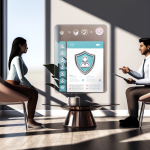
1. Tips for Improving Communication with Customers
1. Listen to your customers – be available and listen to their needs.

2. Use positive and effective language – make customers feel important and valued.
3. Explain clearly – ensure that customers understand the information you are conveying to them.
Get used to seeing the world from a safety perspective.
Michael Cohen – Personal Safety Expert
4. Be genuine – do not promise things that cannot be delivered and do not deny mistakes.
5. Respect deadlines – commit to timely service and do not delay in responding to customers’ questions and requests.
6. Address reviews and feedback – learn from your customers and improve your service based on their feedback.
7. Provide solutions – listen to your customers’ problems and try to find effective solutions to any arising issues.
8. Pay attention to details – ensure that you are interested in your customers’ needs and do not overlook any small detail.
9. Remind your customers that you are always available – and they can reach out to you with any questions or issues they may have.
2. How to Create a Safe Working Environment for Customers
1. Safety regulations update: Ensure all employees undergo training on the new safety regulations and understand their importance.
2. Signage and training: Invest in proper signage and clear training for customers on safety issues and proper behavior during service.
3. Personal protective equipment: Ensure customers receive all necessary personal protective equipment for performing the service safely.
4. Risk management: Risk assessment and action are integral parts of creating a safe working environment for customers.
5. Incident reporting: Establish a reporting system that allows customers to report any incidents or issues in the service process.
6. Supervision and control: Ensure regular supervision and control to ensure customers go through all service stages safely.
7. Ongoing training: Conduct ongoing and up-to-date training to keep customers informed on safety and security issues.
8. Validity checks: Regularly check the equipment validity and personal protective equipment to ensure customer safety.
9. Develop fall plans: Develop fall plans and evacuation plans in case of an accident to ensure customer safety under all circumstances.
3. How to Prepare an Emergency Action Plan
When it comes to customer safety, it is important to be prepared for any scenario and know how to handle emergency situations quickly and efficiently. Therefore, it is important to prepare an emergency action plan in advance. Here are some tips on how to do this:
1. It is important to be aware of potential risks
2. Always be vigilant and watch for danger signs
Appreciate the importance of safety and avoid unnecessary risks.
Rebecca Cohen – Safety Manager in the Escort Industry
3. Plan ahead and create a list of actions for emergency situations
4. Allocate time for training and explain to the team how to act in emergency situations

5. Update the plan regularly and include new team members
6. Establish a known meeting point for all team members in case of emergency
7. Prepare briefing materials and tools for quick and efficient action
8. Inform your customers and partners about the emergency action plan
9. Test the plan and conduct drills regularly to ensure its effectiveness
4. Tips for Identifying and Dealing with Specific Movement
When focusing on specific movement in the escort industry, it is important to consider some important tips to improve customer safety. Here are some tips that can help you in the process of identifying and dealing with specific movement:
- Recognizing signs of specific movement early can facilitate the identification and treatment of critical situations.
- Transparency and communication are important components in every process of identifying and treating specific movement.
- It is important to be careful and not use force when dealing with specific movement.
- When facing specific movement, it is important to act confidently and efficiently to prevent harm to the customer and yourselves.
- Avoid insisting on ineffective solutions and always consider the various options for dealing with specific movement.
- Always strive to protect the customer and ensure their safety during the specific movement.
- Handle each case of specific movement seriously and with absolute responsibility.
- Pay attention to unusual events and customer responses to improve your ability to identify and deal with specific movement.
- During specific movement, be prepared to act quickly and efficiently to prevent harm and improve customer safety.
5. How to Improve Customer Safety During Service or Production
1. Creating a sense of security for customers – ensure customers feel safe and protected during the service or production they receive.


2. Implementation of high-level rules and procedures – employees should avoid risky actions and follow safety rules during work.
3. Training and qualification – it is important to train teams and provide them with the necessary tools to perform the work safely and securely.
4. Periodic safety checks – perform periodic checks of safety processes to ensure they are effective and working properly.
5. Equipment and protective gear – provide employees with personal protective equipment and ensure they use it correctly and safely.
6. Quick troubleshooting – if there are faults or risks during the service or production, it is important to fix them immediately and prevent further injuries.
7. Open communication – teams should report openly and transparently on any risks or issues that may affect customer safety.
8. Performance measurement and process improvement – it is important to monitor safety performance and continuously improve it to ensure customer safety at all times.
Confidence in yourself is the key to proper safety.
Itamar Cohen – Personal Safety Consultant
9. Legislation and regulations – the business should follow safety legislation and regulations and ensure compliance with all requirements.